Will Car Insurance Cover Small Dents
Small dents are usually covered under collision, but filing often costs you more than paying for the repair yourself.
What decides if a small dent is worth claiming
- Your deductible amount If the dent will cost less to fix than your deductible, filing a claim gets you nothing. Call a body shop first and get a real repair estimate before you decide anything.
- Collision vs comprehensive A dent from hitting something is collision, a dent from a falling branch or hail is comprehensive. Check which coverage you carry, since one or both may be missing from your policy.
- Rate impact over time A paid claim can raise your rate even for small damage, and that increase can last a few years. Ask your insurer directly how a small claim like this would affect your renewal.
- Cosmetic vs structural damage A shallow dent with no paint damage might be fixable by paintless dent repair for much less than body shop pricing. Get a quote for both methods before involving insurance at all.
- State and insurer rules differ Some insurers waive small claims under certain conditions, and some states limit how long a claim affects pricing. Ask your agent what applies to your policy specifically.
A shopping cart dent in a parking lot
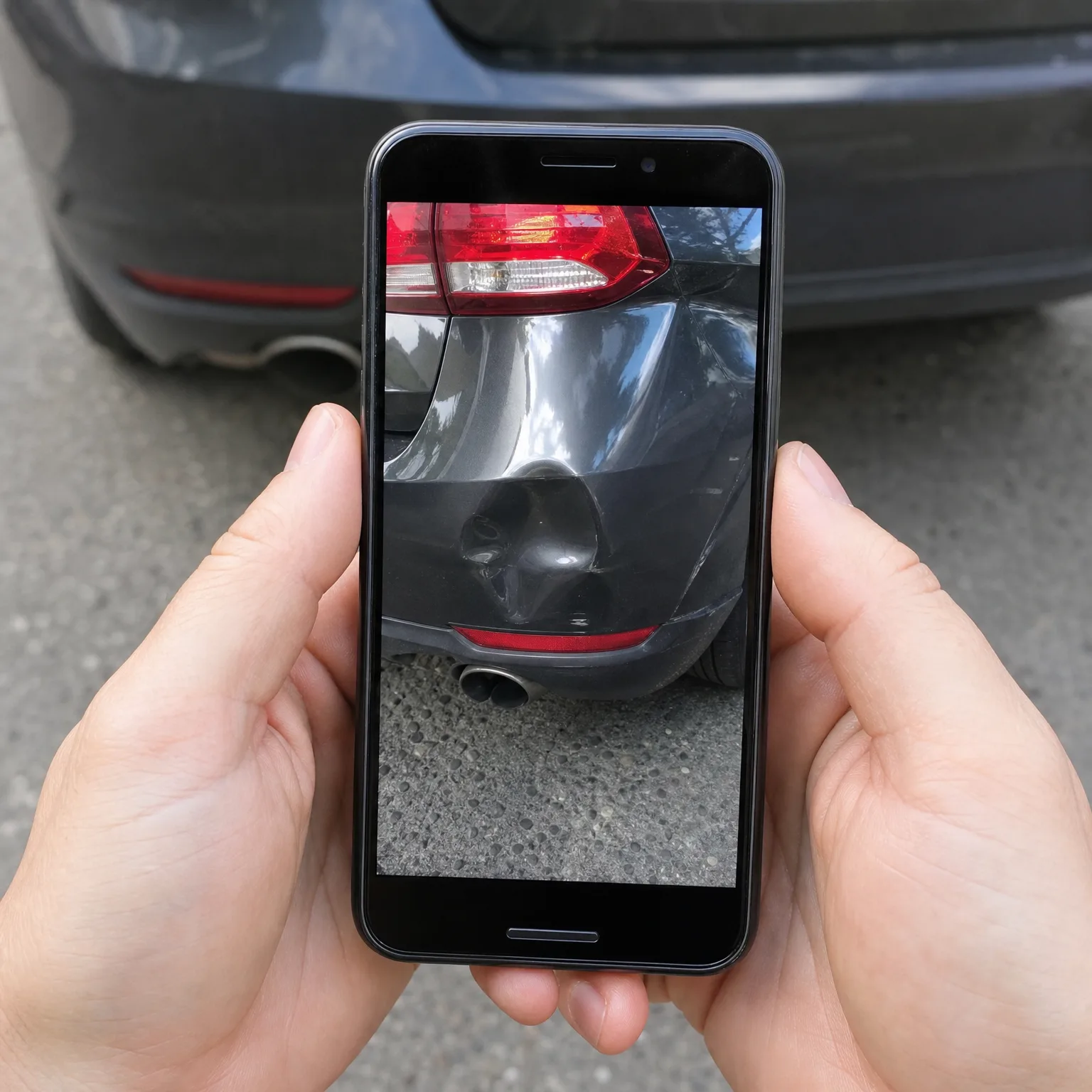
You come back to your car and find a fist-sized dent in the rear door, paint intact, probably from a cart or a careless door. No note, no witness, nothing to go on. You're not hurt, nothing else is damaged, and your first instinct is to call your insurer right away.
Instead you call two local shops, one that does traditional bodywork and one that specializes in paintless dent repair. The paintless option comes in well under your deductible, so you pay out of pocket and skip the claim entirely. Your policy stays untouched, your renewal stays the same, and the dent is gone in an afternoon. Had the estimate come in above your deductible, filing would have made more sense, since the insurer would have absorbed the difference instead of you.
Should I file a claim for a small dent or just pay for it myself?
Get the repair estimate first, then compare it to your deductible. If the estimate is close to or below your deductible, paying yourself almost always makes more sense, since a claim at that size can raise your rate without netting you any real payout.
If the estimate is well above your deductible, filing usually wins, because the insurer covers the gap and your out-of-pocket cost drops. The only exception is if you're already close to a rate increase threshold or shopping for new coverage soon, since even a small paid claim can show up in that process. When in doubt, ask your agent to run both scenarios before you decide.
Once you know whether this dent is worth claiming, compare quotes to see how that choice fits your current rate.

Why small damage doesn't always mean a smart claim
Insurance is built to cover losses that would hurt you financially, not every scratch or ding that happens to your car. A deductible exists specifically to filter out the small stuff, so the system only pays once damage crosses a certain size. That's by design, not a loophole.
What changes the math is how insurers price risk going forward. Filing a claim, even a small one, becomes part of your history with that insurer, and history is what they use to predict whether you're likely to file again. A small claim can signal more risk than its dollar amount suggests, which is why the rate impact can outlast the payout itself.
This is also why the repair estimate matters more than the dent's appearance. A small-looking dent can be expensive if it affects a sensor, a panel alignment, or paint matching on a newer car. A rough-looking dent can sometimes be cheap if it's purely cosmetic and fixable without repainting. The visual size of the damage and the cost to fix it don't always match.
Where this plays out differently is based on your specific policy and state. Some insurers have forgiveness provisions or claim-free discounts that change the calculation, and some states regulate how claims history affects pricing. None of that is guesswork you should do yourself, it's worth a direct question to your agent before you file anything.

The size of the dent doesn't decide this, the repair cost compared to your deductible does.